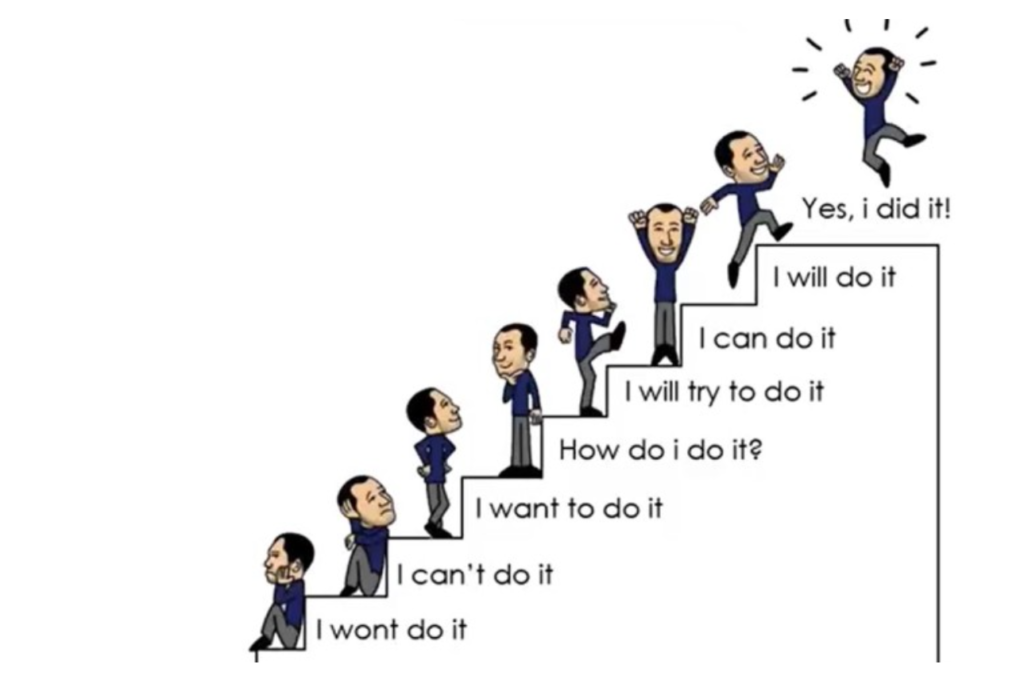
Hey everyone! Are you ready to take your IELTS exam to the next level? Join my IELTS preparation classes and get the support and guidance you need to achieve your goals. I have years of experience helping students improve their scores and reach their full potential. Don’t miss out on this opportunity to achieve your dream score. Sign up now and let’s get started!
The International English Language Testing System (IELTS) is a widely recognized test that assesses the language proficiency of non-native English speakers. The test is recognized by universities, employers, and immigration authorities around the world. Taking the IELTS can provide many benefits for individuals looking to advance their careers.
Here’s how taking the IELTS can give you an edge in your career:
- Impress potential employers by demonstrating your language proficiency. As English is widely considered a global language, many companies now require or prefer applicants who are proficient in it. An IELTS score proves to employers that you have the language skills they need.
- Open doors to new job opportunities. If you’re looking to work in countries where English is widely spoken, such as the United States, Canada, or Australia, the IELTS can be a requirement for getting a job. With an IELTS score, you can apply for jobs that were previously out of reach.
- Get a promotion or raise. Many companies now require their employees to have a certain level of English proficiency. Show your employer that you have the language skills they’re looking for and that you’re ready for a promotion with an IELTS score.
- Study abroad. If you’re dreaming of studying in an English-speaking country, an IELTS score is often required. Prove to universities that you have the language skills they’re looking for and that you’re ready to study in their program with an IELTS score.
Don’t let language proficiency hold you back in your career. Take the IELTS and unlock new opportunities today!
DM for more details about the course.
]]>He thought about this and decided that this was precisely the stuff he wanted to do after 5 years of pre-university studies.
He started researching the whole process. He could find a lot of information just by Googling about it. He was happy and sad at the same time. Some statements confused him, and he started thinking about what to do and where to start. He got two specific pieces of information. 1. He needs to secure an excellent score in IELTS 2. He needs to prepare by himself or attend coaching classes.
He approached his parents and booked a Demo class from a Coaching center nearby. They offered him admission to attend classes for IELTS on a hybrid model that can be studied Online and Offline. He felt that was the best way to prepare.
There he got the Daily Checklist and Weekly Practice tests to create the proper habit to achieve his goal of scoring well in IELTS.
He followed the recommended study plan by the instructor. He started learning a lot about the Big 4 Skills: Reading, Writing, Listening and Speaking.
He also figured out How to prepare ideally for IELTS overall. He felt happy and did daily and weekly activities.
One thing that amazed him is “What if He fails the first time in IELTS?” the answer is he can take it once more and get it done and achieve his goal.
He gave the exam and eventually scored ‘8’ on the Average score in IELTS. He applied to multiple universities in the USA, Canada, Australia, New Zealand, the UK, Malaysia, Singapore, and other countries. He got excited that he could apply to almost all universities with his score.
The Counsellor from the coaching institute helped him select the courses and universities based on specific criteria, allowing him to achieve the best based on his long-term goals.
He got various aspects of Information like Annual Tuition fees, Part-time Income, Room Rent, Food, Transport, Mobile, Savings, and Break-Even in Years. Surprisingly, he got the UK as his choice.
He got an excellent score, a Scholarship OFFER, and a course offer, and he prayed to God that this was the day he had been waiting for so many years. He realized that now was the time to decide and move forward. He moved to the UK to study a futuristic scope-based course.
Later, he completed bachelor’s and Master’s programs. Next, he got selected for Work Full Time based on his Academic excellence in the course. He took up the job and got married. He thought Now was the time to check for the Migration program and after a few years
the migration application got Approved.
This is the Case Study of Kiran and How we started from Humble Beginnings to Study Abroad, Work and Migrate at the End.
]]>Understand the test structure
You should know how this test will be conducted and structured so that you will have no surprises on the test day. While familiarising yourself with the test format, see the type of questions asked in each module.
Test format – Listening (30 minutes)
Test format – Reading (60 minutes)
Test format – Academic Reading (60 minutes)
Test format – Academic Writing (60 minutes)
Test format – General Training Writing (60 minutes)
Test format – Speaking (11–14 minutes)
The sequence of Test Sections for paper-based IELTS
Writing – Listening – Reading
Arrangement of Test Sections for computer-delivered IELTS
Listening – Reading – Writing
Sample Test Questions
It is always better to use the IELTS official practice materials. This will help you to
1. familiarise yourself with the test format
2. try the types of tasks you will be asked to complete in the test
3. test yourself under timed conditions
4. review your answers and compare them with model answers
Once you have solved a few practice question papers, you can try the IELTS Progress Check to ensure your result. IELTS Progress check is an official IELTS online test marked by qualified examiners. This will give you an indicator band score and provide feedback on improvement areas.
What is IELTS Progress Check?
It is an authentic paid IELTS online practice test. You can choose IELTS Academic or IELTS General Training practice tests.
Completed tests are marked by IELTS-trained and qualified markers. Within 5 days, you will get an official feedback report, which includes an indicative overall test score and band scores for each test section (Listening, Reading, Writing & Speaking).
Invest in your success today and purchase IELTS Progress Check. or Practice with Coaching centers.
Request your practice materials from the Coaching centre or Self-Study on the Internet or from Nearby-Stationery, which offers IELTS materials.
The Assessment Criteria for improving your Average Score
Examiners use assessment criteria to decide on a suitable band for your answer.
Writing
- Task Achievement (for Task 1 – Letter or Report writing), Task Response (for Task 2 – Essay writing)
- Coherence and Cohesion
- Lexical Resource
- Grammatical Range and Accuracy
Each criterion has 25% weightage, and the score for the task is the average of these 4 bands.
Speaking
Speaking is evaluated based on the following four assessment criteria.
- Fluency and Coherence
- Lexical Resource
- Grammatical Range and Accuracy
- Pronunciation
Each criterion has 25% weightage, and the overall speaking score is the average of these 4 bands.
Re-Sitting the IELTS test
You should re-write the test if you cannot meet the minimum eligibility requirement for IELTS. You can find a suitable test date at a test centre near you from the IELTS website and book the same. However, before you appear for the test again, you must work on your language and improve your fluency. Taking time to learn the English language is an investment worth many opportunities in the future.
We have some handy sample test questions to help you prepare to retake the IELTS exam. We suggest you read how to prepare and follow a plan to make the best of your time.
]]>The best practice is to pick up a time slot every day of 15mins each. Pick a skill to study, like Reading, Writing, Listening, or Speaking. Be confident, try at least 1 article or topic, and write and practice writing. Check out some audiobooks and practice listening, find a video to watch and learn, and speak in front of the mirror. Don’t be shy. It doesn’t matter if mistakes happen. Don’t give up. Just Practice! Practice! Practice!
Step 2: Weekly at least 1-2 Mock exams, either Self-study or Coaching classes.
There are numerous ways to take mock exams at least 2 a week for constant practice and to get a hold of it.
It gives the perfect simulated environment to the actual IELTS exam. Helps individuals to manage his/her time effectively and focus on solving the questions given in the exam.
Step 3: Understanding the structure of the Exam and Setting up a Goal for your score to achieve.
There are two types of tests: IELTS Academic and IELTS General Training. Both tests, including UKVI, can be taken as a traditional exam (paper-based test) or on the computer (computer-delivered IELTS). These tests also are accepted online from home or another private location with a stable internet connection. Whether or not a home-based test is an option will depend on the country you are in.
You have the same Listening and Speaking tests for Academic and General Training. Still, the Reading and Writing formats are different.
Make sure you choose and prepare for the correct test type per your requirement. Choose IELTS Academic for study abroad and IELTS General Training for PR and work.
The test is divided into two parts. The Listening, Reading, and Writing sections are on the same day, with no breaks.
The Speaking test is an interview. This may be scheduled up to a week before or after the other tests.
Step 4: Have a Topper Mindset before you start the exam.
Having a winning Topper Mindset is crucial in any main activity in life. Whether it is learning a new skill or taking an Exam. The top achievers say that 80% of life is about how you respond to a problem and 20% about the problem itself.
Before you start the exam, reaching the centre on time and having a calm a collected mindset helps.
A good mindset is being ready to accept the worst scenario but working toward achieving the best possible outcome.
Watches are not allowed in the exam hall. You will have to keep your belongings in a locker. Every test room in the test centres has a clock on the wall.
The online test will have a digital clock on the screen. Check the time every 15-30 mins. Staying aware of the time can help you attempt all questions. But at the same time, try not to be distracted by it.
Step 5: Focusing on Why Rather than How attitude
In Life or Exam, Why you are doing something is essential. We all are motivated by Why we do what we do than How we do things. We won’t do it correctly if there’s not enough inspiration to do it.
]]>A person starting IELTS test preparation for the first time may feel like he/she is doing something new. It can be overwhelming, too, like how you might feel when you go to a new place or start interacting with new people. The IELTS exam preparation can be a unique experience. You need a month or two to prepare yourself to do well in the test. Planning and sticking to a schedule helps you complete the preparation. A friend of mine once told me, “Failing to plan is a plan to fail!”
How to prepare even if you’re a First timer or Repeater
1. Understand why the IELTS exam is to be taken, i.e., Study, Work, or Migration. Understand the score requirement to complete the documentation.
Most Candidates, for the first time, apply for IELTS to study at a foreign university. Some will be for Work Visa requirements and migration.
To submit the score to a university, IELTS Academic is to be chosen. IELTS General Training score can be used to process your application for migration or other work-related prerequisites.
2. Make a Decision and be sure that the IELTS exam is the top priority
It doesn’t become a priority if you don’t make it an absolute must-do. We often tend to get diverted from our goals and, as a result, end up procrastinating. Hence, making it a part of your daily routine is crucial. Prioritizing and preparing a timetable to study will help you stay focused and complete your preparation.
It takes a month or two to prepare well and practice. It is better to write the exam a week or two (but not any longer) after the preparation. This helps you focus on all that needs to be focused on. It is essential to make sure not too much time has elapsed and that you forget what you have worked on.
3. Know the structure of the IELTS exam – Reading, Writing, Listening, and Speaking
There are four modules in the IELTS test: Reading, Writing, Listening, and Speaking. The test is conducted in two parts. The main exam comprises the Writing, Reading, and Listening modules. The speaking test, which is an interview, is held separately. You may opt to take a computer-delivered test or a paper-based test as suitable.
IELTS Academic and IELTS General Training are the two types of IELTS tests. The listening and speaking questions are the same for Academic and General Training. The pattern/questions are different in Reading and Writing tests.
Reserve the Listening, Reading, and Writing date when you book the test. All IELTS tests’ Listening, Reading, and Writing modules are completed on the same day, with breaks. This test is for 2 hours and 45 mins (approximately).
The Speaking test, an interview, may be scheduled up to a week before or after the other tests. The speaking test is for 11-14 minutes.
4. Be calm and don’t worry too much about the result since you can sit for the test any number of times as a repeater. It is better to clear the test on the first attempt, but if you can’t, that’s ok!
Being calm helps you think better, and undoubtedly you will perform well in the speaking test. Imagine being all nervous and fumbling while speaking in a speaking test! One of the great secrets of achievers and top performers is: Having a calm-minded approach and letting it go. Focusing on the present moment. You might think it is easily said than done! Some excellent anxiety management techniques can help you in these situations.
5. Make it a daily practice to study for the test and take numerous mock exams from reliable sources. These will give you a simulated environment for the authentic IELTS exam.
Make it a habit to practice vocabulary, learn in-depth about each skill, and attempt at least 1-2 mock exams weekly.
6. Have an end in mind – The worst case is you consider the exam a mock exam. Hence, there’s always one more time you can try it and do thorough research about Average Scores, which are accepted by most Universities or Countries.
The More clarity you have about the Average score accepted in various Universities/countries, the better you can focus overall.
]]>